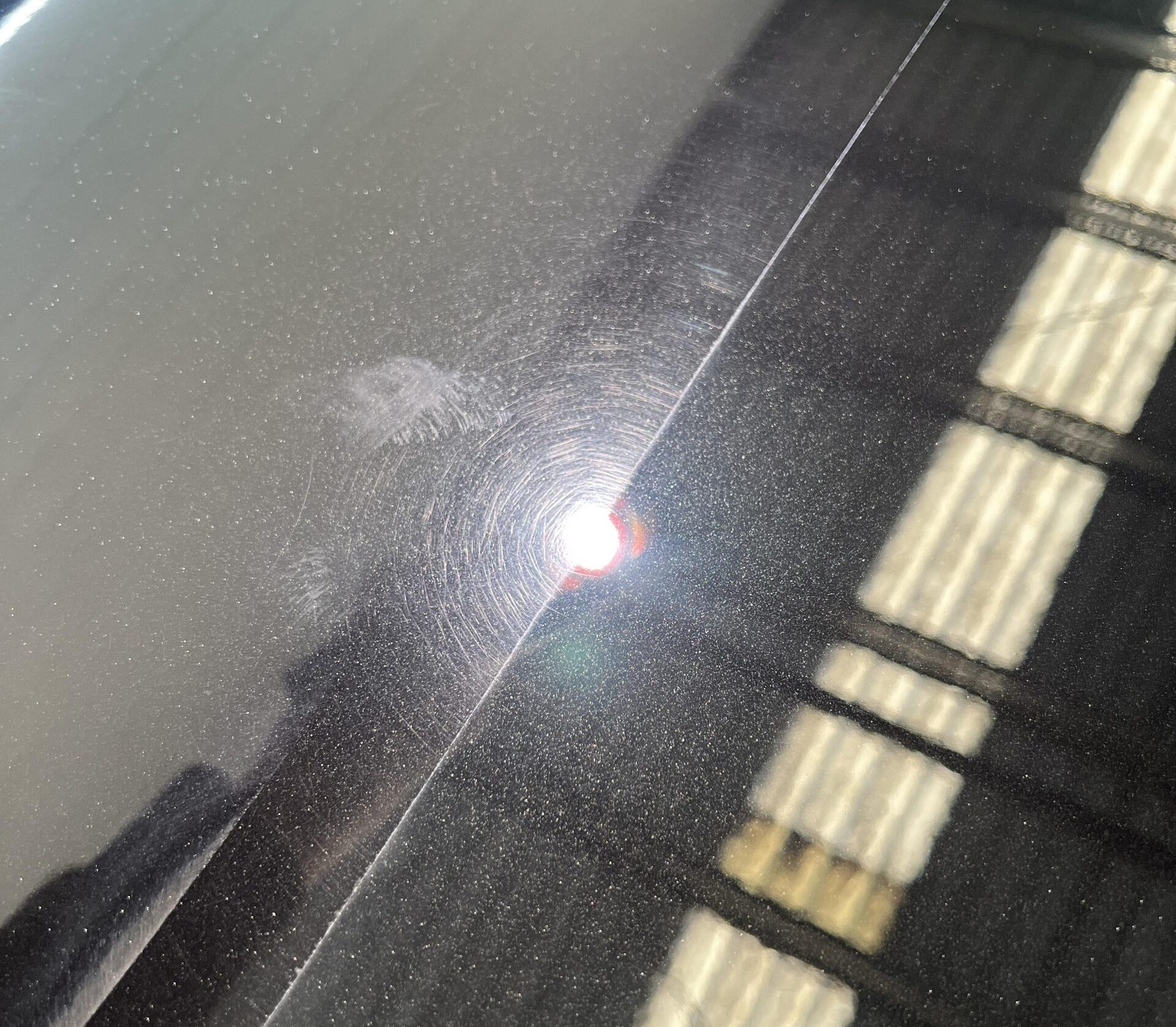
Paint Correction vs Ceramic Coating: What Do You Need First?
A lot of people assume ceramic coating will somehow hide existing scratches and swirl marks, but that’s not really how it works.
Paint correction fixes the finish, while ceramic coating helps protect it. They’re two different services, and how much of each you need depends on the condition of your car.
What Is Paint Correction?
Paint correction is basically machine polishing the paintwork to remove or reduce defects like swirl marks, light scratches and oxidation. There are different levels of correction depending on how bad the paintwork is.
Single-stage polishing involves one polishing stage to improve gloss and remove lighter defects. It’s usually enough for cars in reasonably good condition.
Multi-stage correction involves separate cutting and refining stages to tackle more noticeable defects. It takes longer, but can make a much bigger difference on heavily swirled or neglected paintwork.
Our standalone Cut & Polish service starts from $660, with more extensive correction quoted depending on the car.
What Is Ceramic Coating?
Ceramic coating is a protective layer applied over the paintwork. It helps with water repellency, environmental contamination and making the car easier to wash. You can read more about our ceramic coating packages.
Why Does Paint Correction Come First?
If your paintwork is covered in swirl marks, those marks are still going to be there after ceramic coating.
That’s why every ceramic coating package at Dux includes a single-stage machine polish, even on brand new cars.
We start with a thorough wash and decontamination, inspect the paintwork under dedicated lighting and take paint thickness readings before polishing.
Some cars only need a light polish, while others need a bit more work. It really comes down to how the paint looks when we inspect it.
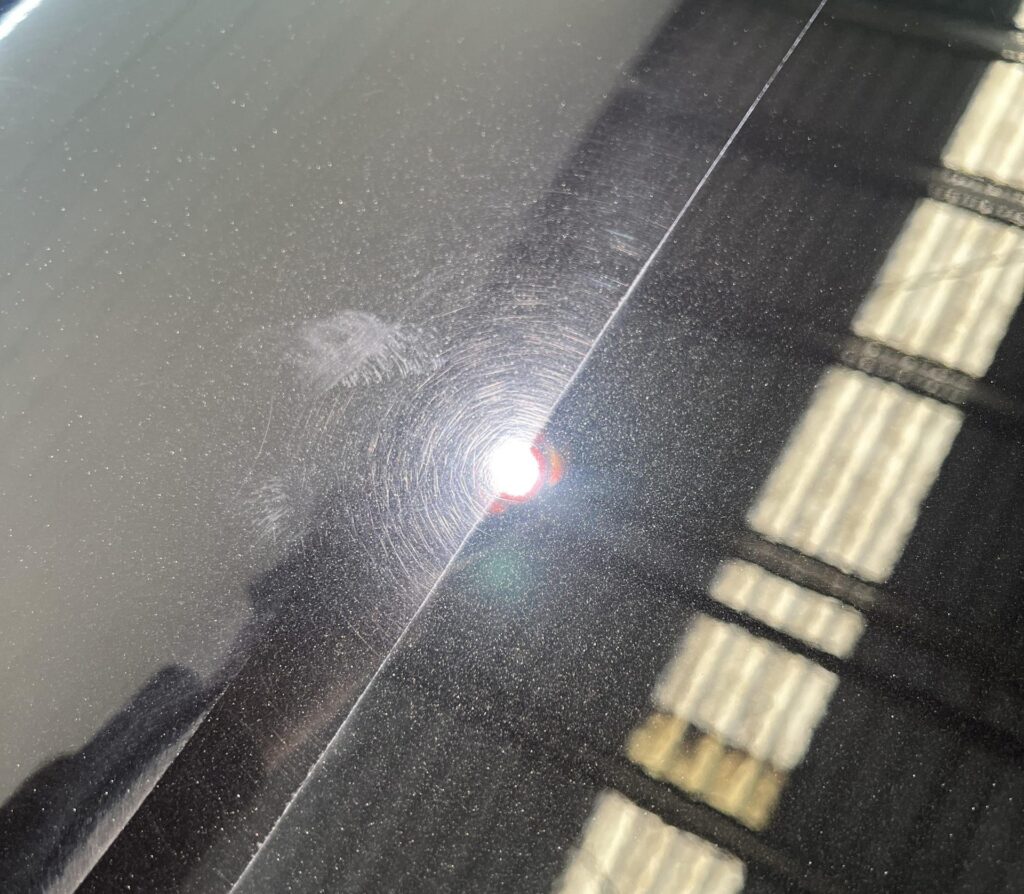 BeforeAfter
What Can Paint Correction Actually Fix?
Machine polishing can make a massive difference, but there’s a limit to what it can remove.
Generally removed or improved
- Swirl marks from washing
- Light surface scratches
- Some oxidation and fading
- Certain water spot etching
- Holograms and buffer trails from previous polishing
Polishing won’t fix
- Scratches that have gone through the clear coat
- Stone chips where paint is missing
- Peeling or failing clear coat
- Rust
The Fingernail Test
A quick way to check a scratch is to gently run your fingernail across it. If your nail catches, there’s a good chance it’s too deep to remove completely through polishing.
It’s not a perfect test, though. Some deeper scratches can still be improved, even if we can’t get rid of them entirely. We’d need to inspect the paintwork before saying what’s achievable.
How Much Clear Coat Can You Safely Remove?
Every time you correct scratches through machine polishing, you’re removing a small amount of clear coat. And once that clear coat is gone, it’s gone.
That’s why we take paint thickness readings and assess the paintwork before polishing. Those readings help us make decisions, although they don’t tell us exactly how much clear coat is left.
If a scratch is too deep, we’d rather leave a bit of it there than keep polishing away perfectly good clear coat trying to get it out. Especially on older cars that may have already been polished several times.
Do You Need Both Paint Correction and Ceramic Coating?
Not necessarily. Here’s how we’d generally approach it.
| Paint condition | What we’d recommend |
|---|---|
| Brand new car | Light polish and ceramic coating (New Car package) |
| Used car with decent paint | Single-stage polish and ceramic coating |
| Used car with heavy swirls | More extensive correction before coating |
| Selling the car soon | A standalone cut and polish may be enough |
| Limited budget | Depends on what bothers you most |
Every ceramic coating package at Dux already includes a single-stage polish. If the paintwork needs more attention, additional correction starts from $300.
What If You Can’t Afford Both?
I’d base it on what matters more to you.
If the swirl marks and scratches are driving you nuts every time the sun hits the car, I’d put the money towards paint correction first. You can always protect the finish with a decent wax or sealant for now.
But if you’re not too fussed about the existing marks and mainly want longer-lasting protection and easier washing, a light polish followed by ceramic coating probably makes more sense. (Still deciding? Read is ceramic coating worth it?)
There’s no point paying for extensive correction if you’re already happy with how the paint looks.
What Happens If You Polish but Don’t Protect the Paint?
Nothing happens immediately. Paint correction isn’t something that wears off after a few months.
But without protection, the paintwork is more exposed to contamination, and poor washing techniques can introduce new swirl marks pretty quickly. Even a basic wax or sealant is worth using after polishing (ceramic coating vs wax).
And ceramic coating doesn’t make your car scratch-proof either. You still need to wash it properly.
Frequently Asked Questions
Will Paint Correction Remove All Scratches?
No. Light scratches and swirl marks can often be removed, but deeper scratches may only be improved. If the scratch has gone through the clear coat, polishing won’t replace the missing paint.
How Long Does Paint Correction Last Without Ceramic Coating?
There’s no set timeframe. The corrected finish can last for years if you look after it, but poor washing techniques can introduce new swirls after only a few washes.
Can I Get Ceramic Coating Without Paint Correction?
Yes. You don’t always need extensive correction, especially if the paintwork is already in good condition. We still include a single-stage polish with every coating package to prepare the surface and improve the finish.
How Long Does Paint Correction Take?
It depends on the condition of the paintwork and how much correction is needed. A single-stage polish is generally quicker than multi-stage correction. For our ceramic coating packages, we allow a minimum of two days for the full process.
So, Which One Should You Get?
If you’re mainly bothered by scratches and swirl marks, focus on paint correction. If you’re happy with how the paint looks and want easier maintenance, ceramic coating makes more sense. And if you want both, we can work out how much correction is actually needed before coating.
Our Cut & Polish service starts from $660, and our ceramic coating packages start from $1,300 with a single-stage polish already included.
Cut & Polish Ceramic Coating Packages